Saturday, June 30, 2007

In The Mind of The Psychopath


Came across the transcript of a very interesting radio brodcast on psychopathy. The programme which aired back in March 2002 was introduced as follows:

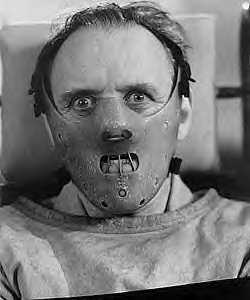
"In fiction there's been Hannibal Lecter and American Psycho. In real life, the legacy of notorious serial killer Ted Bundy still resonates. But how much can we believe of Hollywood's Tinseltown representations of psychopaths? What is it that defines psychopathic personality? Is it a distinct psychological state? And what hope for a cure?"

The show features the thoughts and views of Dr James Blair and Stuart Skinner. At the time, Dr Blair was a Senior Lecturer at the Insitute of Cognitive Neuroscience University College London and Stuart Skinner was a researcher in Forensic Psychology at the School of Psychology University of Queensland.

If you would like to read the transcript from this engaging broadcast, you can do so by Clicking Here

More Information

The All About Forensic Psychology Website has a page dedicated to understanding the Psychopath, which you can access by Clicking Here.

Recommended Reading

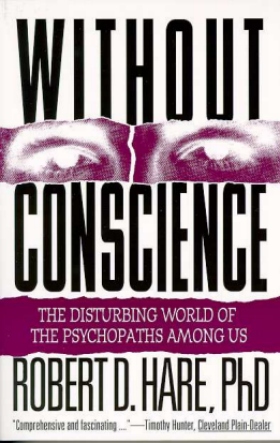
Without Conscience: The Disturbing World of The Psychopaths Among us by Robert Hare.


Book Description

Most people are both repelled and intrigued by the images of cold-blooded, conscienceless murderers that increasingly populate our movies, television programs, and newspaper headlines. With their flagrant criminal violation of society's rules, serial killers like Ted Bundy and John Wayne Gacy are among the most dramatic examples of the psychopath. Individuals with this personality disorder are fully aware of the consequences of their actions and know the difference between right and wrong, yet they are terrifyingly self-centered, remorseless, and unable to care about the feelings of others. Perhaps most frightening, they often seem completely normal to unsuspecting targets and they do not always ply their trade by killing.

Presenting a compelling portrait of these dangerous men and women based on 25 years of distinguished scientific research, Dr. Robert D. Hare vividly describes a world of con artists, hustlers, rapists, and other predators who charm, lie, and manipulate their way through life. Are psychopaths mad, or simply bad? How can they be recognized? And how can we protect ourselves? This book provides solid information and surprising insights for anyone seeking to understand this devastating condition.

Click Here To Get Hold of The Book

Visitors From The UK Click Here


www.all-about-forensic-psychology.com

A Free & Comprehensive Guide to The World of Forensic Psychology


Monday, June 25, 2007

Criminal Profiling Articles


Read a very interesting criminal profiling article in Monitor on Psychology, the online publication of The American Psychological Association. The first article entitled, Criminal profiling: the reality behind the myth by Lea Winerman documents how Forensic psychologists are working with law enforcement officials to integrate psychological science into criminal profiling. The article covers a range of topics including:

  • How Criminal Profiling Works


  • Psychology's Contributions to Criminal Profiling


  • Crime Action Profiling


  • The Psychology-Law Enforcement Relationship


  • Click Here to read the article in full. From this page, you can also access another related article that addresses whether criminal profiling works.


    www.all-about-forensic-psychology.com

    A Free & Comprehensive Guide to The World of Forensic Psychology


    Friday, June 22, 2007

    The Study and Practice of Forensic Psychology: A Comprehensive Review


    The Study and Practice of Forensic Psychology: A Comprehensive Review is an excellent article that first appeared in the February edition of the forensic psychology newsletter. It was written by Dr. Christopher Cronin, a licensed clinical psychologist who has held academic positions in Europe (University of Maryland, Munich Campus), Australia (Flinders University of South Australia) and the United States (Transylvania University and Saint Leo University).

    Dr Cronin has practiced forensic psychology since 1991 conducting competency to stand trial evaluations and criminal responsibility evaluations for the Commonwealth of Kentucky. He is Professor and Director of Graduate Training at Saint Leo University in Florida and has conducted over 1800 court-ordered forensic evaluations in the Tampa Bay area.

    For anybody interested in forensic psychology this is a must read article, and with this in mind, I have added the article to the main forensic psychology website, which can be accessed by Clicking Here.


    www.all-about-forensic-psychology.com

    A Free & Comprehensive Guide to The World of Forensic Psychology


    Wednesday, June 20, 2007

    Expanding The Use of Geographical Profiling

    Expanding The Use of Geographical Profiling


    Read a very interesting news article about how geographic profiling techniques are going to be employed to help Canadian military forces uncover the supply chain for deadly roadside bombs and other explosive devices in Afghanistan. The plan is to produce threat maps which give a probability of where bomb making factories, meeting points and organization points are likely to be.

    How Does Geographical Profiling Work?

    Geographic profiling works on the premise that the location of a crime site can provide vital information. It assesses and predicts the offender’s most likely place of residence, place of work, social venues and travel routes etc.

    Geographic profiling consists of both quantitative (objective) scientific geographic techniques and qualitative (subjective) components e.g. a reconstruction and interpretation of the offender’s mental map.’

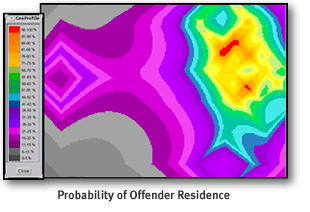
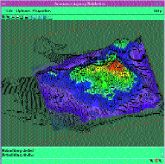
    The primary geographic technique is a computerised system known as Criminal Geographic Targeting (CGT). Put simply, spatial data i.e. data relating to time, distance and movement to and from the crime scenes is analysed to produce a three-dimensional model known as a jeopardy surface.


    The jeopardy surface contains height and colour probability codes which when superimposed onto a map of the area in which the serial crimes have been committed give an indication of the likelihood of offender residence or place of work.

    Recommended Reading


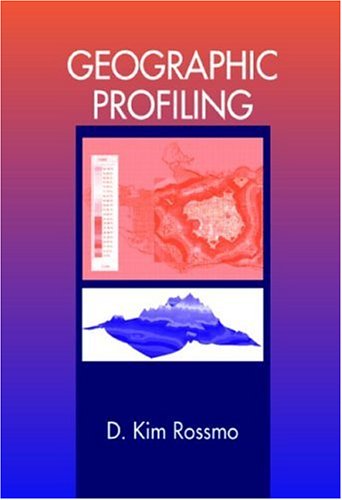
    Geographic Profiling by Kim Rossmo introduces and explains a cutting-edge investigative methodology used to analyze the locations of a connected series of crimes to determine the most likely area of offender residence. It allows investigators and law enforcement officers to effectively manage information and focus their investigation.

    This work explains geographic profiling theories and principles, and includes an extensive review of the literature in the areas of criminal profiling, forensic behavioral science, serial violent crime, environmental criminology, and the geography of crime. Geographic Profiling provides many tables and figures, including color plates, and a glossary, as well as case descriptions of some of the most notorious serial killers in the history of American justice, from Albert DeSalvo and David Berkowitz to Aileen Wuornos and Jeffrey Dahmer.

    Click Here For Full Details

    UK Visitors Click Here


    www.all-about-forensic-psychology.com

    A Free & Comprehensive Guide to The World of Forensic Psychology


    Tuesday, June 19, 2007

    Forensic Psychology Forum


    Just to let you know that the Forensic Psychology Forum is up and running again. It was originally launched at the end of last year but was quickly overrun with SPAM and I had to suspend the right for users to post - which rather defeated the object of the forum.

    I'm pleased to announce, however, that registered users can now post again and that I have put a number of measures in place to deal with the problem of SPAM. I have deleted all Spam related users from the system and no newly registered members can post until I have checked and personally activated their account.

    Another way to ensure the integrity of the forum is to have plenty of board moderators, who can delete any Spam or inappropriate posts as soon as they appear. If you would like to be a moderator on the forum, just let me know, it really just involves deleting any SPAM posts you come across when visiting the forum; and it's something extra to put down on your resume/CV.

    There are a number of topic categories on the forum e.g. criminal profiling, psychopathy, forensic assessment, forensic psychology careers, forensic science etc; but please feel free to suggest any new topic areas.

    I'll be promoting the forum over the next few days, so hopefully it won't be too long before we have an active and vibrant online community.

    Click Here to visit the Forensic Psychology Forum, and don't forget to register if you haven't already done so.


    www.all-about-forensic-psychology.com

    A Free & Comprehensive Guide to The World of Forensic Psychology


    Monday, June 18, 2007

    Criminal Profiling in The Past


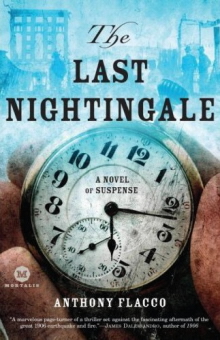
    Thought I'd draw your attention to a book I've just ordered; The Last Nightingale by Anthony Flacco. What caught my eye from the following book review was that this fictional work set in San Francisco at the time of the earthquake in 1906 portrays criminal profiling in an historical context.

    Book review by Jennifer Baker from Booklist

    Few literary depictions of the 1906 San Francisco earthquake match the intensity and visceral power of those in Flacco's gripping first novel. The author's screenwriting talent shines in this story of the earth's destructive power and humanity's moral depravity. Buildings lie in brick heaps; those buried under rubble await discovery, and emergency systems fail while citizens scramble to cope. As the broken city reels, a seething criminal element quickly grasps unprecedented opportunities for wrongdoing in the quake's aftermath.

    Mired in corruptive disarray, the police force is helpless against a ruthless, knife-wielding serial killer known as the Surgeon, whose latest victims are three women named Nightingale, killed in their home in the hearing of an unseen witness: Shane, the adopted son, who cowers hidden from view. Shocked and broken, Shane nevertheless steps forward to help a much-maligned Sergeant Blackburn catch the killer, offering his intuitive talent for psychological profiling. The emerging maniacal personality, revealed in increasingly gruesome and venomous detail, rivals the Ripper. Dickens meets Hannibal Lecter. Brace yourself.

    Click Here To Get Hold of The Book

    Visitors From The UK Click Here


    If you would like to learn more about criminal profiling, don't forget that there are a number of pages dedicated to the subject on the main forensic psychology website.

    Click Here to learn about the origins of criminal profiling.

    Click Here to learn about the FBI approach to criminal profiling.

    Click Here to learn about criminal profiling methodology.

    Click Here to learn about geographical profiling.

    Click Here for some criminal proiling career advice.


    Friday, June 15, 2007

    Disorders in the Court: Forensic Psychology Practice


    The video below is entitled. Disorders in the Court! Forensic Psychology Practice. This short but very useful presentation by Sally Manner offers a clear and concise account of several aspects of forensic psychology practice. These incude:

  • The role of the psychologist in forensic cases and how this differs from other applications of psychology.


  • Examples of forensic psychology related criminal issues e.g. competency to stand trial, mental state evaluations and mitigating factors.


  • Examples of forensic psychology related civil issues e.g. family and child custody, testamentary capacity, independent medical evaluations


  • Psychological Evaluations


  • www.all-about-forensic-psychology.com

    A Free & Comprehensive Guide to The World of Forensic Psychology

    Wednesday, June 13, 2007

    Forensic Psychology Podcast: The history of serial killers


    Fascinating podcast featuring author and forensic psychology lecturer Katherine Ramsland talking about the history of serial killers. Among the issues discussed is the myth that serial killers are a product of the modern age and the misconception that serial killers neatly fit the profile of white male loner.

    Click Here to listen to this great forensic psychology podcast.

    If you would like to learn more about this fascinating topic area, get hold of Katherine Ramsland's latest book.

    The Human Predator: A Historical Chronicle of Serial Murder and Forensic Investigation


    Book Description

    From ancient Rome through the Dark Ages to the burgeoning West to the open highways of urban America, from the unconscionable exploits of French religious zealot Gilles de Rais to such all-American monsters as Jeffrey Dahmer and Aileen Wournos, Katherine Ramsland makes an eye-opening case for the existence of serial killers throughout time, and offers a complete chronological record of the serial-killer phenomenon-as well as the parallel development of psychology, forensic science, and FBI profiling in the serial killer's evolving manifestation throughout human history.

    Click Here For Full Details

    Visitors From The UK Click Here


    www.all-about-forensic-psychology.com

    A Free & Comprehensive Guide to The World of Forensic Psychology

    Friday, June 08, 2007

    Forensic Research: Help Develop The Depravity Scale (Re-post)


    This is a repost of a blog item posted last year.

    Dr Michael Welner is self-funding a research project entitled The Depravity Scale. The Depravity Scale research aims to establish societal standards of what makes a crime depraved, and to develop a standardized instrument based on specific characteristics of a crime that must be proven in order to merit more severe sentences. In order to make the results of this very important research generalizable, as large a subject pool as possible is required.

    Dr. Michael Welner


    Michael Welner, M.D. is responsible for a number of groundbreaking innovations in psychiatry. As founder and Chairman of The Forensic Panel, he devised and implemented the first peer reviewed protocols in the United States for forensic consultation. Under Dr. Welner's leadership, The Forensic Panel has achieved his vision of presenting "the last word" to retaining attorneys, opposing counsel, and the courts. This has consistently helped to resolve cases without appearance at trial.

    Dr. Welner's casework has spanned numerous areas of the criminal, civil, employment, and family law, often focusing on frontier issues. Through respect for the science, and dogged investigation, Dr. Welner has promoted and embodied diligence and objectivity as a staple of the forensic examination. He has lectured on numerous forensic and clinical issues as an invited speaker of, among others, the American Bar Association, American Society of Clinical Psychopharmacology, International Bar Association, Pennsylvania State Senate Judiciary Committee, and various medical center Grand Rounds, at venues around the world.

    In 1996, he introduced The Forensic Echo, and originated the format of a cutting-edge, practitioner-written forensic journal that combined commentary with case and science updates with investigative reporting. More recently, Dr. Welner has pioneered the effort toward establishing a forensic definition of evil. The Depravity Scale is a history-driven forensic assessment instrument that will standardize the definition of "heinous," "atrocious," and "cruel" for purposes of fair and consistent application in criminal sentencing.

    What is the Depravity Scale Research?

    Judges and juries both across the United States and in other countries who decide that a crime is "depraved," "heinous," or "horrible" can assign more severe sentences. Yet there is no standardized definition for such dramatic words that courts already use. And while we may all recognize that some crimes truly separate themselves from others, there is no standard, fair way to distinguish crimes that are the worst of the worst, or "evil."

    To minimize the arbitrariness of how courts determine the worst of crimes, and to eliminate bias in sentencing, the Depravity Scale research aims to establish societal standards of what makes a crime depraved, and to develop a standardized instrument based on specific characteristics of a crime that must be proven in order to merit more severe sentences.

    This research will refine into the Depravity Standard, an objective measure based on forensic evidence. This instrument distinguishes not who is depraved but rather, what aspects of a given crime are depraved and the degree of a specific crime's depravity. The research will enhance fairness in sentencing, given that it is race, gender and socio-economic blind.

    The research has already been guided by legal and scientific study. Now, two surveys have been developed to involve the general public in establishing societal standards of what makes a crime depraved. Phase B enables the general public to shape the specific intents, actions, and attitudes that should be included as items of the Depravity Standard instrument; and Phase C involves the general public in refining the relative weight of these items. In both surveys, all members of the general public are urged to participate. This is the first project ever developed that invites citizens' direct input to forensic science research, and the first project ever developed in which citizens shape future criminal sentencing standards.

    Click Here To Read The FAQ About The Depravity Scale

    What Do You Think


    As the research team note: No matter who you are, where you're from, or what your personal and professional experiences are, your opinion counts in this international study to help distinguish what we all can agree on are the worst of the worst crimes.

    The web-based research survey only takes about 15 minutes to complete. All of your responses are kept confidential and no personal information is ever released.

    Click Here To Participate

    Wednesday, June 06, 2007

    The Forensic Psychology Toolbar


    As most of you will probably know, a toolbar is an easy-to-use group of buttons that sit in your Internet browser for quick and easy access.

    The all about forensic psychology toolbar buttons allow you to search the web, access quality forensic psychology links, receive the latest psychology news and articles from psychology today and tune into BBC Radio 4 so that you can listen to great psychology related programs such as all in the mind.

    Anybody interested in forensic psychology and psychology in general should find the toolbar a handy and convenient resource and the best bit is that it is completely free to download.

    Click Here to get hold of the forensic psychology toolbar.

    Monday, June 04, 2007

    Forensic Psychology Book of The Month (May)

    Evaluating Competencies: Forensic Assessments & Instruments by Thomas Grisso


    Book Description

    This book offers a conceptual model for understanding the nature of legal competencies. The model is interpreted to assist mental health professionals in designing and performing assessments for legal competencies defined in criminal and civil law, and to guide research that will improve the practice of evaluations for legal competencies.

    A special feature is the book's evaluative review of specialized forensic assessment instruments. Application of the assessment model and reviews of instruments are provided for six areas of legal competence:

  • Competence to Stand Trial
  • Waiver of Rights to Silence and Legal Counsel
  • Not Guilty by Reason of Insanity
  • Parenting Capacity - Determination of Child Custody
  • Guardianship and Conservatorship
  • Competence to Consent to Treatment

  • Click Here to visit the forensic psychology book of the month page for full details.

    Posttraumatic Stress Disorder: The Forensic Minefield


    Excellent article documenting the range of issues that surround the use of the diagnosis Post Traumatic Stress Disorder (PTSD) within civil and criminal proceedings. Among the issues addressed in the article are:

  • The credibility of expert testimony


  • Mitigation in sentencing


  • Misconceptions regarding the nature of trauma and stress


  • Misdiagnosis


  • Forensic assessment


  • This article was first published in Psychiatric Times in December 2005

    Click Here to read the article in full.

    Sunday, June 03, 2007

    Going Beyond The Mo: Criminal Profiling, Jack The Ripper And Signature Behavior


    The primary aim of criminal profiling is to reveal the behavioral make-up of an unknown offender. To understand how this can be achieved, this blog item draws upon Robert Keppel's analysis of the Jack the ripper murders in order to examine the concept of signature behavior and how this differs from the offender’s Modus Operandi.

    Modus Operandi

    I’m sure you’ve all watched a film or TV series where a detective at a crime scene asks ‘what’s the MO?’. MO stands for Modus Operandi and it literally means way of working, and it’s what an offender does in order to carry out a crime. For example, a burglar who always uses a glass cutter to gain access to a house is demonstrating an aspect of his or her MO or way of working. From an investigative point of view analysis of the offenders MO can be used to link cases at crime scenes, however, a major stumbling block is that an offenders MO (way of working) can change.

    Consequently, according to criminal profilers you have to analyse behavior that transcends the MO. Innate behavior that is static and rigid; behavior that remains the same over time. This behavior relates to the things offenders are psychologically compelled to do over and above what it takes to commit the crime, and in the world of criminal profiling, this type of behaviour is known as signature behavior.

    Signature behavior

    A very useful two part definition of offender signature is provided by Brent Turvey.

    Signature Behaviors

    Signature behaviors are those acts committed by an offender that are not necessary to complete the offense. Their convergence can be used to suggest an offender’s psychological or emotional needs (signature aspect). They are best understood as a reflection of the underlying personality, lifestyle, and developmental experiences of an offender

    Signature Aspects

    The emotional or psychological themes or needs that an offender satisfies when they commit offense behaviors.

    Robert Keppel has written widely on criminal profiling and signature behavior and analysis. In 2002 I was fortunate enough to hear him speak at a forensic science conference in Atlanta. Entitled ‘A signature analysis of the eight Whitechapel murders attributed to Jack the Ripper in 1888’ Robert Keppel's presentation sought to explain the processes involved in linking murder cases through Modus Operandi and signature.

    The reason I want to include it here is that I remember thinking at the time, and still do, that it provides an excellent way of showing how the MO and signature differ in terms of what they tell you about a particular crime. The following information is taken from Keppel’s abstract in the conference proceedings.

    Jack the Ripper’s Modus Operandi

    He attacked white female prostitutes in their 40’s in a cluster of victims within a short distance of each other. The first four victims Mary Nichols, Annie Chapman, Elizabeth Stride and Catherine Eddowes were killed and found outdoors in the Whitechapel area; then he changed his MO by killing and leaving the fifth victim Mary Kelly, indoors. By choosing to murder Kelly indoors, the killer demonstrated that he was an experienced night time cat burglar and stalker, as he attacked all his victims in the early morning hours when dawn was approaching

    Jack the Ripper’s signature

    Remember this relates to what he did over and above what was necessary to commit the crime, it transcends the MO

    Each victim was posed in a sexually degrading position, intentionally left that way so the discovery of the bodies would startle the people who found them. They were not concealed or hidden away, but placed in locations where they would be easily discovered. The placing of the victims on their back, grotesquely laid out with their throats cut and viscera exposed or missing, reflect the cruel reality of the killer, his total mastery over their bodies. The pleasure for the killer was demonstrating each victims vulnerability.

    Incidentally Keppel does not believe that all the murders attributed to Jack the ripper where in fact carried out by him. He claims that in the case of three of his alleged victims there were fundamental differences in the signature of the crimes.

    However, there is no doubt that like his fellow writers on the topic Keppel firmly believes that signature behaviour represents a real and intrinsic part of the offender’s personality.

    "Hidden among the evidence, often gleaned from the marks and wounds on the victim’s body…these signatures are the only ways the killer truly expresses himself." (Keppel & Burns).

    Click Here To Find Out About The History of Criminal Profiling and The FBI Legacy

    Friday, June 01, 2007

    Forensic Psychology: Key Historical Figures

    To fully appreciate a subject it's important to be aware of the key historical figures who helped shape its identity. This blog article identifies a number of individuals who did just that within the field of forensic psychology.

    Wilhelm Wundt


    In terms of a tangible landmark in the history of forensic psychology the most significant development was the founding of the first psychological laboratory in 1879 by Wilhelm Wundt in Leipzig Germany.

    Wilhelm Wundt championed and refined the experimental method within psychology. This rigorous methodology provided the framework for a whole host of applied psychological investigations, among them certain legal issues. For instance, a number of experiments were conducted into the nature of witness testimony, the findings of which highlighted the effects of situational and individual differences; which incidentally are still being examined today.

    Hugo Munsterberg


    An engaging and controversial figure Hugo Munsterberg was a key figure in the history of forensic psychology. He studied under Wundt at Leipzg before moving to the USA in 1892 to set up an experimental laboratory at Harvard; the principal aim of which was to introduce applied psychology into the courtroom.

    He conducted research into witness memory, false confessions and the role of hypnosis in court. One of his earliest experiments tested subjects’ ability to discriminate between sounds heard in quick succession. Almost sixty years later his findings were included as part of the preparation for the trial (which for obvious reasons never actually took place) of Lee Harvey Oswald to help address the question of how many shots had been fired during the assassination of President Kennedy.

    William Marston


    Another important visionary in the history of forensic psychology. Marston was a student under Munsterberg who conducted research into the physiological effects of deception i.e. lie detector tests.

    Alfred Binet


    In 1889 Alfred Binet co-founded the first psychological laboratory in France. Having studied medicine and law he was interested in how psychology could be applied within the legal system, particularly in relation to witness testimony. However, it was Binet’s work into intellectual assessment that was to have the greatest forensic impact. Working alongside Theodore Simon, he developed the first psychometric test of intelligence, the principles of which proved the basis for later forensic assessment. For instance, in the US the Wechsler Intelligence test for children was regularly employed as part of proceedings within juvenile court.

    Later, group testing became extremely popular, particularly within the armed services as a way of selecting recruits and before long objective tests were being employed across a host of professions and for a variety of purposes as a means of measuring behavioural traits, skills, attitudes etc. Significantly for the practice of forensic psychology this included the judiciary who began allowing test results to be presented as evidence in court.

    Click Here For More Information on The History of Forensic Psychology

    Understanding Hate Crimes


    Very interesting article on hate crimes by John Ireland. The starting point for the article is the premise that despite widespread public support, hate crime law across the United States remains inconsistent and the crimes often go unpunished.

    A number of issues are explored including the motives underpinning hate crimes. In discussing hate crimes against homosexuals, the article quotes Karen Franklin, a forensic psychology fellow at the Washington Institute for Mental Illness Research and Training, who argues that there are four major motives common to such crimes: ideology, thrill seeking, peer dynamics and panic defense. The common thread, she says, is that “offenders perceive that they have societal permission to engage in violence against homosexuals.”

    The article also reports the views of the American Psychological Association (APA), which contends that most hate crimes are committed by “otherwise law-abiding young people who see little wrong with their actions… [and who see] difference as threatening.” The APA further asserts, “There is overwhelming evidence that society can intervene to reduce or prevent… hate-induced violence that threatens and intimidates whole categories of people.”

    Click Here to read the article in full.