Friday, November 10, 2006

Profiling Serial Killers: Limitations of The FBI Approach

The American Academy of Psychiatry and the Law held its annual meeting in Chicago at the end of October. One of the panel discussions during the meeting was entitled 'Serial Killers: From Cradle to Grave' which addressed the perceived limitations of FBI profiles. Among the issues raised were the following:


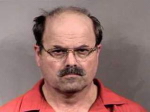
The notorious BTK murderer Dennis Rader who remained at large for over 30 years did not fit into the FBI's profiling methodology in relation to crime scenes.



Florida prostitute Aileen Wuornos convicted and subsequently executed for the murder of several men was effectively excluded from profiling typologies because the FBI database of convicted serial killers did not include women.

The FBI tends to categorise a crime scene as either organized or disorganized. An organized crime scene is said to highlight the control and careful planing the suspect has displayed in his/her environment when commissioning the crime; thereby pointing to an educated and socially competent individual. In contrast, a disorganized crime scene points to a lack of control and an absense of intelligent decision making. The disorganised suspect does little if anything to cover his/her tracks, pointing to a suspect who is either of low intelligence or a habitual user of drugs and/or alcohol.

On the surface this seems to be a perfectly reasonable classification system but one of the issues under discussion was the fact that crime scenes often have both organized and disorganized aspects. Dr Charles L. Scott who led the panel discussion states that the actions of BTK
murderer Dennis Rader provide a clear example of this. Scott suggests Rader's first crime scene demonstrates this ambiguity as there was clear evidence of advance planning and his domination of the environment but there were several disorganized elements as well e.g. leaving behind the Venetian blind cords he used as a strangling device.

Scott also points to the problems associated with the fact that in developing profiles of serial killers, the FBI draws on data and findings elicited from interviews with just 36 convicted serial murderers, all of whom were male and 90% of them white; which raises the question of relevance in relation to female or non-caucasian serial killers.

According to Dr Scott “The FBI profiling method has many positive attributes. But it also has some inherent limitations”, and that the purpose of the panel discussion was not to critique the FBI, but acquaint forensic psychiatrists with how the FBI profiles serial killers.

Have Your Say



So what do think of FBI profiling, art or science? Help or hindrance? Why not post your views over at the All About Forensic Psychology Forum?

Visit The Forensic Psychology Forum



If you would like to find out more about criminal profiling, don't forget that there are several pages dedicated to the subject on the main forensic psychology website.

Click Here To Visit The Forensic Psychology Website

Wednesday, November 08, 2006

Masters Degree Review: University of Liverpool (UK)


Master of Science in Investigative Psychology:

The overall aims of the MSc in Investigative psychology course are to enable students to acquire the knowledge, skills and experience that will enable them to develop professional roles as investigative psychologists in law enforcement and similar agencies; and contribute to the growth of the discipline of investigative psychology through research, teaching and similar scholarly pursuits.

To achieve these aims the course provides the opportunity to gain relevant knowledge by providing the opportunity for students to gain a sound conceptual basis for the understanding of:

The available explanations of criminal behaviour.
The varieties of criminal activities and approaches to their classification, including:

  • arson

  • burglary

  • fraud

  • homicide, single and serial

  • threat and extortion

  • rape

  • robbery

  • stalking

  • criminal violence

  • organised crime and drug networks


  • Approaches to the treatment and assessment of criminals.
    Psychological processes in investigative decision making.
    Procedures available for linking crimes to a common offender.
    The psychology of interviewing and approaches to training interviewers
    Basic, relevant issues in the British legal system.
    Professional and ethical issues of relevance to Investigative Psychology.
    The history and critiques of 'offender profiling'.
    The processes of publication and dissemination of academic material.
    The nature and processes of police investigations.
    The procedures available for statement validation and detecting deception.
    The IT procedures drawn on from Crime Analysis.
    Approaches to inferring offender characteristics from crime information.
    Processes relevant to understanding police organisations and criminal networks.


    Professor David Canter, internationally known for his pioneering work in police investigations, is one of the key lecturers on the course and its Director. Dr Ian Donald convenes the methodology course, and Dr Graham Wagstaff the Investigative Actions theme. Other lecturers are drawn from the staff of the Psychology Department and other associated departments at Liverpool University, including the Faculty of Law and Department of Clinical Psychology. Visiting lecturers from British and Overseas police forces and universities also contribute. A team of Post-Doctoral Fellows who are members of the Centre for Investigative Psychology, in which the course is based, also provide guidance and support.

    Other Information


    Contact Information

    Further details about the course can be obtained from:

    Director of Postgraduate Studies
    Centre for Investigative Psychology
    The University of Liverpool
    Eleanor Rathbone Building
    Bedford Street South
    Liverpool L69 7ZA

    Telephone: (0151) 794 3910

    e-mail: enquiries@i-psy.com

    Click Here To Visit The Centre For Investigative Psychology

    About Liverpool


    Click Here To See The Visit Liverpool Website

    Click Here To See The Liverpool Wikipedia Page

    Are You Doing This Degree Course?


    If so, why not tell people what you think by clicking on the comments link below.

    The best way to save this Masters degree review for future reference is to click on the social bookmark this link below.

    Forensic Psychology: Free Internet And Academic Resources


    Since launching the All About Forensic Psychology Website in December 2005, I've added a select number of quality Internet and academic resources to the great free stuff page, which as the name suggests can be obtained free of charge.

    Because of the number of pages and the amount of information on the forensic psychology website, this particular page can be overlooked. With this in mind, the aim of this blog post is to showcase some of the great things you can get hold of for absolutely nothing.


    Google Pack


    A completely free and extremely useful bundle of applications that you can download in a single installation. Features include a Google-tweaked version of Firefox, Adobe Acrobat Reader, antivirus software from Symantec, Google video player, Google Desktop Search, Picasa, Google Earth and Google Talk.


    Student's Guide to APA Psychology


    A must have student free stuff choice for college students. The Student's Guide to APA Psychology shows how to document and format research papers in the style of the American Psychological Association and the American Psychologist. Revised and updated to the new 5th edition of the APA Publication Manual.


    Personal Assistant


    This great time management alarm system is the perfect application for sleepy students who miss lectures, tutorials and important meetings.


    Electronic Post It


    From the company that invented the Post-it note. This digital version of 3M's famous canary-yellow note is perfect for quick reminders on your computer desktop so you never miss a meeting, event, or thought. You can create your own notes with pictures and hyperlinks, stick notes on your computer desktop, and add alarms to your notes as reminders.


    English Dictionary and Thesaurus


    This complete dictionary and multifaceted thesaurus runs locally, so does not use your Internet connection. Notable features include:

    Structured lookup display, advanced wildcard search, tabbed interface, anagram search, customizable user-interface, flexible copy-to-clipboard functionality and multi-session history.


    Desktop Wikipedia & Wiktionary


    Search Wikipedia.org and Wiktionary.org from your desktop. Wikipedia Wiktionary offers you the convenience of an instant lookup tool and high-speed transportation to immense reference pages with little effort on your part. After installing Yahoo Widget Engine, you can search for information by quickly typing a word in its search box on your desktop.

    This useful widget instantly launches your browser and heads to your selected choice, Wikipedia or Wiktionary. In addition, the program is available in English, Spanish, German, Portuguese, and French. Though you can easily look up information on both sites without this widget, its desktop positioning is pretty handy. You can adjust its size, location, and opacity on its preferences menu. Wordsmiths, professionals, researchers, and students will value the convenience this reference tool delivers.


    To get hold of any of the above for free just visit the student free stuff page.

    Click Here To Visit The Great Student Free Stuff Page

    Tuesday, November 07, 2006

    Forensic Psychology Job Vacancies: The University of Aberdeen, Scotland (UK)


    Applications are invited for one Research Assistant position and one Research Fellow in the school of psychology to work on a research project which aims to develop objective and effective means of assessing the extent to which a particular eyewitness memory report can be relied on as evidence.

    Applications for Research Fellow position should have a PhD and a background in experimental social or cognitive psychology and an excellent track record of research in the eyewitness or a related area. Applicants for the graduate position should have a good bachelors/masters degree in Psychology and have relevant research experience.

    The salary will be paid in the range of £22,540 per annum for the Research Assistant post and £26,915 per annum for the Research Fellow post.

    Informal enquiries may be made to Professor Amina Memon (email amemon@abdn.ac.uk, tel: 01224 272230).

    Click Here For Further Particulars And To Access The Online Application Form

    Alternatively telephone (01224) 272727 (24-hour answering service) quoting reference number YPS204R for an application pack.

    The closing date for the receipt of applications is Monday 13th November 2006.

    Sunday, November 05, 2006

    Forensic Degree Review: Rhode Island, (USA)

    Roger Williams University, Bristol, Rhode Island (USA):


    Master of Arts in Forensic Psychology:

    This two-year program, the Master of Arts degree in Forensic Psychology is designed to prepare students to provide assessment and treatment services in a forensic setting or further training at the doctoral level. Students will be trained in psychological testing, treatment, research methodology, and psychopathology. Internships and practica are available at a variety of forensic sites. Experiences include the areas of group psychotherapy, sex offender treatment,individual psychotherapy, psychological testing, and specialized assessment techniques. Research-based internships are also available. Interested students may also train in court clinic settings.

    Mission of the Program

    The Psychology Department strives to provide assessment and treatment skills for students interested in employment in a forensic setting or further training at the doctoral level. Faculty members work closely with students to help them develop an understanding and appreciation of the role of psychologists in legal proceedings and the law. Students are prepared to apply these skills to the problems of community and of the larger society. The department stresses tolerance for the views of others and an appreciation of the value of diversity. Other departmental objectives include preparing students to evaluate published research and think critically about their own ideas and the ideas of others.

    Typical Study Path


    The Master of Forensic Psychology curriculum is arranged in two tracks: (1) Non-Thesis/Practitioner (for students seeking specialized training in psychology prior to entering the work force as Masters level Forensic Practitioners), and (2) Thesis (for students seeking Masters level training in psychology as preparation for future study toward a doctoral degree in psychology). The seven-course core sequence provides students with the breadth and depth needed in theoretical foundation, research and skills to become forensic psychologists. Students then select four electives from various areas within Forensic Psychology. Finally, students take six credits of Thesis or Practicum, according to their track.

    Other Information


    Application Requirements

  • An earned bachelor’s degree in Psychology, Criminal Justice, or related field from an accredited 4-year college or university.

  • Personal statement (two pages maximum) describing your interest in Forensic Psychology, career goals, and how you can positively contribute to the graduate program at Roger Williams University.

  • Official transcripts of all undergraduate and graduate records.

  • Achieved an overall GPA of 3.00 or greater in undergraduate work.

  • Submission of GRE scores (minimum combined score of 1000; quantitative and verbal scores should not be below 500).

  • Three letters of recommendation attesting to the candidate’s academic accomplishments and potential to succeed in graduate school.

  • Application accompanied by the $50 application fee.

  • Completed prerequisite psychology courses in statistics and research methods.


  • Contact Details

    Donald R. Whitworth, Ph.D.
    Professor and Chair, Department of Psychology
    Feinstein College of Arts and Sciences
    Roger Williams University
    One Old Ferry Road
    Bristol, Rhode Island 02809

    Tel: (401) 254-3509

    e-mail: dwhitworth@rwu.edu

    Click Here To Visit The University Homepage

    About Bristol, Rhode Island


    Click Here To Visit the discover Bristol guide

    Click Here To See The Bristol, Rhode Island Wikipedia Page

    Are You Doing This Degree Course?


    If so, why not tell people what you think by clicking on the comments link below.

    The best way to save this forensic psychology degree review for future reference is to click on the social bookmark this link below.