Monday, January 14, 2008

Forensic Psychology Book of The Month (January)

Forensic Psychology

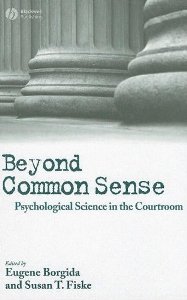
Beyond Common Sense: Psychological Science in the Courtroom Edited by Eugene Borgida & Susan T. Fiske.


Book Description

Beyond Common Sense addresses the many important and controversial issues that arise from the use of psychological and social science in the courtroom.

Features original chapters written by some of the leading experts in the field of psychology and law including Elizabeth Loftus, Saul Kassin, Faye Crosby, Alice Eagly, Gary Wells, Louise Fitzgerald, Craig Anderson, and Phoebe Ellsworth

Each chapter identifies areas of scientific agreement and disagreement, and discusses how psychological science advances an understanding of human behavior beyond what is accessible by common sense. The issues addressed include eyewitness identification, gender stereotypes, repressed memories, Affirmative Action, and the death penalty.

Commentaries written by 7 leading social science and law scholars discuss key legal and scientific themes that emerge from the science chapters and illustrate how psychological science is or can be used in the courts

For more details and/or to get hold of this recommended forensic psychology book, just click on the following link.

Beyond Common Sense: Psychological Science in the Courtroom

UK Visitors Click Here


How you doin? Let people know with our unique personality trait t-shirts and gifts. Whatever your mood, express it with style with our innovative design range. Or why not show your family and friends that you know what makes them tick; psychological profiling has never been so cool. We've also just added a new forensic design range.

Any profit made from the Personality Trait Cafepress store will be put towards the hosting and development costs associated with the All About forensic psychology and All About forensic science websites.

Click Here to visit the Personality Trait CafePress Store.


www.all-about-forensic-psychology.com

A Free & Comprehensive Guide to The World of Forensic Psychology

Forensic Psychology Book of The Month (January)

Wednesday, January 09, 2008

Forensic Psychology Blog: The Zodiac Killer
Forensic Psychology


If you head over to the official website for David Fincher's Zodiac film not only can you find out all about this infamous serial killer case, but you can also watch videos discussing the case in relation to Geographic Profiling, Behavioral Profiling & Linguistic Analysis.

You can visit the Zodiac website by Clicking Here

Related Material

Last year I did a forensic psychology blog post on Douglas Evander Oswell who has spent over 10 years researching the methods, motives, psychological attributes and connection between the Unabomber and the Zodiac.

This forensic psychology blog post included a link to an interview with Oswell in which he outlines the striking connections between the two cases as well as discussing the distinction between serial killers, recreational killers and mass murderers.

You can access this forensic psychology blog post by Clicking Here


Please share this Forensic Psychology Blog Post with others by adding it to your social bookmarks.


How you doin? Let people know with our unique personality trait t-shirts and gifts. Whatever your mood, express it with style with our innovative design range. Or why not show your family and friends that you know what makes them tick; psychological profiling has never been so cool. We've also just added a new forensic design range.

Any profit made from the Personality Trait Cafepress store will be put towards the hosting and development costs associated with the All About forensic psychology and All About forensic science websites.

Click Here to visit the Personality Trait CafePress Store.


www.all-about-forensic-psychology.com

A Free & Comprehensive Guide to The World of Forensic Psychology

Forensic Psychology Blog: The Zodiac

Saturday, January 05, 2008

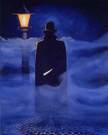
Jack the Ripper: The First Serial Killer

Forensic Psychology Blog


(Photo Credit: Ghostbones)

Happy New Year everyone.

When you teach and study forensic psychology, your interest in the topic stays with you all the time. For instance my holiday TV watching not only included the usual Christmas offerings (It's a wonderful life, Home Alone, Die Hard etc) but also Jack the Ripper: The First Serial Killer.

To be fair I came across this very interesting documentary by chance when flicking through the TV channels; but it's precisely the type of thing I would record and show my students as a way of stimulating discussion and debate. Jack the Ripper: The First Serial Killer was very useful in this respect as it touched on a number of concepts and issues that can be considered within a forensic, psychological and investigative context e.g. can criminal profiling reveal the behavioural make-up of an unknown offender?

Jack the Ripper: The First Serial Killer - Programme Details

For decades the crimes of Jack the Ripper have inspired both horror and intrigue. Theories abound as to the identity of the killer, but few are based on facts. This film follows Laura Richards, a behavioural analyst at New Scotland Yard's Violent Crime Directorate, as she re-opens the case of Jack the Ripper, the first modern serial killer. With the benefits of modern criminology and psychological analysis, and the aid of Britain's best detectives, Richards uses 21st century forensic techniques to understand a 19th century killer, dispelling the many myths that have grown up around the case and revealing the truth about Jack The Ripper, the first modern serial killer.

In the autumn of 1888 Jack the Ripper launched an unparalleled reign of terror onto the streets of London, leaving at least five women severely mutilated. To this day the case remains one of history's greatest mysteries. Drawing together a team who are all experts in their field, Richards sets aside all the suspects and focuses her attention on what the crimes have to say about the killer. Using geographic profiling, they uncover the location where he is likely to have lived and with modern techniques, reveal an accurate E-Fit portrait of the killer.

Richards builds a picture of a man who was perfectly sane, frighteningly normal, and yet capable of extraordinary cruelty. For the first time, we are able to understand the kind of person Jack the Ripper was; we can name the street where he probably lived; and we can see what he looked like; and we can explain, finally, why this killer eluded justice.

Jack the Ripper: The First Serial Killer


Related Material


Going Beyond The Mo: Criminal Profiling, Jack The Ripper And Signature Behavior

This was the title of a forensic psychology blog post I did last year and I thought it would be worth re-publishing here.

The primary aim of criminal profiling is to reveal the behavioral make-up of an unknown offender. To understand how this can be achieved, this blog item draws upon Robert Keppel's analysis of the Jack the ripper murders in order to examine the concept of signature behavior and how this differs from the offender's Modus Operandi.

Modus Operandi

I'm sure you've all watched a film or TV series where a detective at a crime scene asks what's the MO?. MO stands for Modus Operandi and it literally means way of working, and it's what an offender does in order to carry out a crime. For example, a burglar who always uses a glass cutter to gain access to a house is demonstrating an aspect of his or her MO or way of working. From an investigative point of view analysis of the offenders MO can be used to link cases at crime scenes, however, a major stumbling block is that an offenders MO (way of working) can change.

Consequently, according to criminal profilers you have to analyse behavior that transcends the MO. Innate behavior that is static and rigid; behavior that remains the same over time. This behavior relates to the things offenders are psychologically compelled to do over and above what it takes to commit the crime, and in the world of criminal profiling, this type of behaviour is known as signature behavior.

Signature behavior

A very useful two part definition of offender signature is provided by Brent Turvey.

Signature Behaviors

Signature behaviors are those acts committed by an offender that are not necessary to complete the offense. Their convergence can be used to suggest an offender's psychological or emotional needs (signature aspect). They are best understood as a reflection of the underlying personality, lifestyle, and developmental experiences of an offender

Signature Aspects

The emotional or psychological themes or needs that an offender satisfies when they commit offense behaviors.

Robert Keppel has written widely on criminal profiling and signature behavior and analysis. In 2002 I was fortunate enough to hear him speak at a forensic science conference in Atlanta. Entitled: A signature analysis of the eight Whitechapel murders attributed to Jack the Ripper in 1888 Robert Keppel's presentation sought to explain the processes involved in linking murder cases through Modus Operandi and signature.

The reason I want to include it here is that I remember thinking at the time, and still do, that it provides an excellent way of showing how the MO and signature differ in terms of what they tell you about a particular crime. The following information is taken from Keppel's abstract in the conference proceedings.

Jack the Ripper's Modus Operandi

He attacked white female prostitutes in their 40's in a cluster of victims within a short distance of each other. The first four victims Mary Nichols, Annie Chapman, Elizabeth Stride and Catherine Eddowes were killed and found outdoors in the Whitechapel area; then he changed his MO by killing and leaving the fifth victim Mary Kelly, indoors. By choosing to murder Kelly indoors, the killer demonstrated that he was an experienced night time cat burglar and stalker, as he attacked all his victims in the early morning hours when dawn was approaching

Jack the Ripper's signature

Remember this relates to what he did over and above what was necessary to commit the crime, it transcends the MO

Each victim was posed in a sexually degrading position, intentionally left that way so the discovery of the bodies would startle the people who found them. They were not concealed or hidden away, but placed in locations where they would be easily discovered. The placing of the victims on their back, grotesquely laid out with their throats cut and viscera exposed or missing, reflect the cruel reality of the killer, his total mastery over their bodies. The pleasure for the killer was demonstrating each victims vulnerability.

Incidentally Keppel does not believe that all the murders attributed to Jack the ripper where in fact carried out by him. He claims that in the case of three of his alleged victims there were fundamental differences in the signature of the crimes.

However, there is no doubt that like his fellow writers on the topic Keppel firmly believes that signature behaviour represents a real and intrinsic part of the offender's personality.

"Hidden among the evidence, often gleaned from the marks and wounds on the victim's body these signatures are the only ways the killer truly expresses himself." (Keppel & Burns).


Further Information From The Forensic Psychology website

Geographic Profiling

Criminal Profiling: First Documented Use

Criminal Profiling: The FBI Legacy


Please share this Forensic Psychology Blog Post with others by adding it to your social bookmarks.


How you doin? Let people know with our unique personality trait t-shirts and gifts. Whatever your mood, express it with style with our innovative design range. Or why not show your family and friends that you know what makes them tick; psychological profiling has never been so cool and a new forensic range has just been added.

Any profit made from the Personality Trait Cafepress store will be put towards the hosting and development costs associated with the All About forensic psychology and All About forensic science websites.

Click Here to visit the Personality Trait CafePress Store.


www.all-about-forensic-psychology.com

A Free & Comprehensive Guide to The World of Forensic Psychology

Jack the Ripper: The First Serial Killer

Tuesday, December 18, 2007

Touching Evil: Getting To Know A Serial Killer


Touching Evil: Getting to know a serial killer is the title given to a three part series published in the Pittsburgh Post-Gazette. The story surrounds a class of senior forensic science majors at Dunquesne University who contacted and corresponded with the serial killer Keith Hunter Jesperson for a class project. Keith Hunter Jesperson murdered at least eight women between 1990 and 1995.

Background To The Forensic Science Project

The idea for the project was put forward by course teacher Ronald Freeman as a way of providing students with an alternative perspective on forensic investigation. "In school, they talk to professors, scientists, and I'm an ex-cop. They get our perspective on the criminal justice system. I thought, 'Why not try to look at it from a different side?'"

Having suggested and ascertained that the forensic science class wanted to contact Jesperson, approval was also sought from the students parents, the director of the forensic science and law degree program and the dean of the school.

Making Contact

Click Here to read the first letter the forensic science students sent to serial killer Keith Hunter Jesperson.

In addition to the original letter, a further dozen or so were exchanged between Jesperson and the forensics class and on the 5th of November the class held a live Q&A session with Jesperson via conference call.

Audio Excerpts

You can listen to several excerpts from the conference call by clicking on the following links.

How Jesperson Killed His Victims

The Happy Face Killer Nickname

Things Jesperson Regrets

What Compelled Jesperson To Kill

Why Jesperson Agreed To Particpate In The Class Project

What Went through Jesperson's Mind As He Killed

What Do You Think About This Project

My personal view is that generally speaking it evokes all the normal reactions associated with anything to do with serial killers i.e., compelling, fascinating, intriguing etc but I have to say that this project makes me feel very uncomfortable on a number of levels.

I have no doubt that the intentions of the project were honorable and genuinely designed to provide a unique learning experience for the students involved, but I am struggling to see how this experience would translate into improved forensic investigation skills and/or knowledge in the field.

Even if this could be qualified in some way I strongly believe that Jesperson got so much more out of this that the students ever could, not least beacuse it provided him with the perfect platform to do what he loves doing best, namely manipulating, dominating and controlling. The following quotes from class members were just two of many that made me wince.

"I had no idea that he was going to turn out to be actually such a pretty nice guy aside from the fact that he killed a bunch of people."

"I guess I expected someone who would be a little more harsh and callous, but he was really nice, like an uncle kind of nice, which is kind of strange,"

I also found aspects of the reporting crass in the extreme. The start of second part of the Touching Evil: Getting to know a serial killer series begins:

The student's blood-red T-shirt was a big hit. "Friends help you move," the front said. And on the back, "Real friends help you move a body." The dark humor was dead-on funny for the 30 Duquesne University forensic science and law majors.

Gallows humor is common place within the forensic community and serves as a useful coping mechansim, but it's nearly always kept in-house and I think to document something like this in such a public way shows a basic lack of respect for the victims and the their families, however, unintentional.

You can have your say by clicking on the comments link at the end of the post.

More Information

A number of video clips regarding this project have been produced which can be accessed by Clicking Here

You can read the first part of the Touching Evil: Getting to know a serial killer series by Clicking Here

You can read the second part of the Touching Evil: Getting to know a serial killer series by Clicking Here

Related Reading

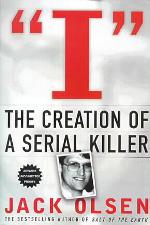
"I": The Creation of a Serial Killer by Jack Olsen


Library Journal Book Review

During the 1990s, the Pacific Northwest was besieged by a serial killer, Keith Hunter Jesperson, who taunted the police for incarcerating the wrong people for one of his eight victims; he signed his letter to the police with a happy face and hence became known as the Happy Face Killer.

Renowned true-crime author Olsen (Hastened to the Grave) uses diaries, court records, and interviews with the killer himself to present Jesperson's version of why he became a serial killer and how he killed his victims. As a truck driver, he was able to travel cross-country and kill young women who, he thought, were going to present a problem for him. With each of his victims, he played a "death game" in which he choked them, then revived them a few times before killing them.

The book's flaw is that it is one-sided. The reader is not told how law enforcement officers caught on to Jesperson or about the trial. Nor does it provide details as to what happened to the wrongly convicted. Nevertheless, Olsen's popularity in the genre will make this a popular choice for public libraries.

For more details and/or to get hold of this book, just click on the following link.

I: The Creation of a Serial Killer

UK Visitors Click Here


How you doin? Let people know with our unique personality trait t-shirts and gifts. Whatever your mood, express it with style with our innovative design range. Or why not show your family and friends that you know what makes them tick; psychological profiling has never been so cool and a new forensic range has just been added.

Any profit made from the Personality Trait Cafepress store will be put towards the hosting and development costs associated with the All About forensic psychology and All About forensic science websites.

Click Here to visit the Personality Trait CafePress Store.


www.all-about-forensic-psychology.com

A Free & Comprehensive Guide to The World of Forensic Psychology

Touching Evil: Getting To Know A Serial Killer

Sunday, December 16, 2007

Forensic Psychology Book of The Month (December)

Forensic Psychology

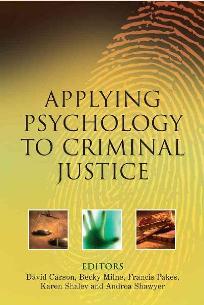
Applying Psychology to Criminal Justice by David Carson et al


Book Description

Psychology and Law has made enormous strides during the last three decades. It now incorporates a much wider range of topics and has seen a marked international growth in specialist journals, books and conferences. The focus, until now, has been on research and academic membership rather than on practical applications and participation by practitioners, psychologists or lawyers, something this volume aims to change.

This book develops the case for successfully applying psychology to law, and criminal justice in particular, by providing a rich range of applicable examples for development, now and in the future. In Applying Psychology to Criminal Justice psychologists are encouraged to challenge the currently relatively limited ambition and imagination of psychology and law by examining, amongst other aspects:

The relevance of offenders’ methods of thinking and concepts to criminal responsibility.

The ways in which psychology might be used to inform analyses of corporate responsibility for systems failure.

How analyses of decision-making under pressure are most effectively undertaken.

How psychological research and insights might be applied to the investigation and analysis of system failure.

This text is an important addition to the bookshelves of forensic, legal, clinical, and occupational psychologists, students, and criminal justice personnel: police, probation, prisons. Also essential reading for investigators, lawyers, law reform agencies, and those government departments concerned with home, constitutional, law reform agendas.

For more details and/or to get hold of this recommended forensic psychology book, just click on the following link.

Applying Psychology to Criminal Justice

UK Visitors Click Here


How you doin? Let people know with our unique personality trait t-shirts and gifts. Whatever your mood, express it with style with our innovative design range. Or why not show your family and friends that you know what makes them tick; psychological profiling has never been so cool.

Any profit made from the Personality Trait Cafepress store will be put towards the hosting and development costs associated with the All About forensic psychology and All About forensic science websites.

Click Here to visit the Personality Trait CafePress Store.


www.all-about-forensic-psychology.com

A Free & Comprehensive Guide to The World of Forensic Psychology

Forensic Psychology Book of The Month (December)