Friday, November 17, 2006

Key Figures in Eyewitness Memory Research: Professor Gary L. Wells

The aim of this blog post is to showcase the work of Professor Gary Wells because in doing so, readers will be introduced to some of the most important and influential research within the field of eyewitness memory.


Gary L. Wells (Ph.D. from Ohio State University, 1977) is Professor of Psychology at Iowa State University and holds the title of Distinguished Professor. Professor Wells is also the Social Science Research Director of the American Judicature Society's Institute of Forensic Science and Public Policy in Greensboro , North Carolina. He is an internationally recognized scholar in scientific psychology and his studies of eyewitness memory are widely known and cited. Wells has authored over 150 articles and chapters and two books. Most of this work has been focused on the reliability of eyewitness identification. His research on eyewitness identification is funded by the National Science Foundation and his findings have been incorporated into standard textbooks in psychology and law.

His studies demonstrate that rates of mistaken eyewitness identification can be exacerbated by the methods that crime investigators use in conducting lineups and photo spreads. Professor Well's eyewitness research program was launched in 1974 and is directed at discovering the causes of mistaken identification from police lineups and photo spreads; with a particular emphasis on how to prevent these errors. Numerous successful interventions have been developed, such as:


  • Improved instructions to eyewitnesses


  • Improved techniques for structuring lineups and photo spreads


  • Safeguards for insuring the integrity of the administration of lineups and photo spreads.


  • Over 30 years of groundbreaking research has produced a large number of theoretical and applied real world advances. These include developing a better understanding of the tenuous link between confidence and accuracy in eyewitness identification, describing the origins of false confidence, defining the domain of variables that control accuracy, and proposing and developing new lineup procedures. In relation to developing new lineup procedures, two major advancements are the The Sequential Lineup (put simply witnesses view suspects one at a time rather than simultaneously); and Double-Blind Techniques whereby the person responsible for the lineup does not know who the real suspect is.

    Professor Wells has served as an expert for the defense, prosecution, and plaintiffs in criminal and civil cases across the U.S. and Canada. His conclusions about eyewitness identification have received national media attention in such places as the New Yorker magazine, Time magazine, the Chicago Tribune, the Los Angeles Times, and the New York Times. He has made appearances on CBS’s 48 Hours, the NBC Nightly News, CNN’s Newsnight, and NBC’s Today Show, among others. He has given more than 100 workshops and presentations to trial judges, prosecutors, defense attorneys, and police across the U.S. and Canada in the last five years.

    He was a founding member of the U.S. Department of Justice group that developed the first set of national guidelines for eyewitness evidence. He co-chaired the panel that wrote the Justice Department training manual for law enforcement on the collection and preservation of eyewitness identification evidence, which has been distributed to every law enforcement agency in the U.S. Wells has worked with prosecutors and police in New Jersey, North Carolina, Maryland, Massachusetts, California, Washington, Wisconsin, Minnesota, Illinois, Colorado, Iowa, New York, and other states to reform the way they conduct police lineups. In 2001 Wells was given the Distinguished Contributions to Psychology and Law Award from the American Psychology-Law Society. In 2004, Wells was elected President of the American Psychology-Law Society.

    To find out more about Professor Wells and how to access his comprehensive collection of quality eyewitness memory related reference material visit the main forensic psychology website.

    http://www.all-about-forensic-psychology.com/eyewitness.html

    Thursday, November 16, 2006

    Top Quality Psychology Resource: PsychSplash


    In this post I just want to draw your attention to PsychSplash, which is an outstanding psychology resource that showcases other great psychology resources.

    What you will find on PsychSplash is an ongoing commentary of Psychology related websites and psychology related blogs.


    Gareth Furber BPsych (Hons), PhD

    This innovative and much needed psychology resource is written and maintained by Gareth Furber who notes that PsychSplash is a project aimed at reviewing the web for Psychologists and that the idea grew out of his interest in the web and fascination with how something so huge like the internet could actually make your life easier.

    Well Gareth has certainly made life easier for anybody looking for quality psychology information and there are plenty of things of interest relating to forensic psychology and the application of psychology in a legal context.

    A great feature of PsychSplash is its interactivity. You can comment on Gareth's articles and psychology reviews, make suggestions, express your opinion, direct people to psychology related sites and you can get all the latest PsychSplash entries delivered straight into your inbox.

    Click here to Vist The PsychSplash Homepage

    Tuesday, November 14, 2006

    Critical Issues in Forensic Psychology: False Confessions

    The topic of false confessions is another very important issue within a legal context where psychological knowledge and expertise can be brought be bear. Psychological vulnerabilites and interrogative circumstances are two of the key areas that have been examined by psychologists in relation to false confessions.

    The reason that the study of false confessions is such an important topic within forensic psychology is that research into the reliability of testimony and suggestibility is as old as the discipline itself.


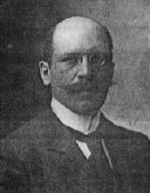
    Hugo Munsterberg

    In 1908 Hugo Munsterberg published 'On The Witness Stand: Essays on Psychology And Crime'. One of these essays was entitled 'Untrue Confessions'. The writing of Hugo Munsterberg was not only groundbreaking but also very perceptive. In the first sentence of his essay on false confessions he stated that:

    I am most seriously convinced that it is a tragedy not only of crime but also of human error and miscarried justice, and my scientific conscience as a psychologist compels me to speak of it because the tragedy of yesterday may come up again, in some other form, tomorrow


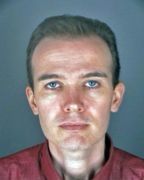
    John Mark Karr

    Munsterberg's contention that false confessions were a normal phenomena triggered by unusual circumstances was most recently brought to light in the circumstances surrounding the John Mark Karr case. In relation to the unsolved murder of six-year-old JonBenét Ramsey, John Mark Karr claimed that he was present when Ramsey died and that her death was an accident. Authorities were made aware of Karr via the e-mail correspondence he had with Michael Tracey, a journalism professor at the University of Colorado. Karr was arrested in Bangkok returned to the USA for questioning. Shortly after, prosecutors announced they would not be pursuing charges in connection with the murder after DNA tests failed to place Karr at the scene.

    Theoretical explanations for the psychology of false confessions

    The work of Kassin and Wrightsman in the USA and Gudjonsson in the UK has done a great deal to further our understanding of the psychology of false confessions. To find out more about this work, along with links to a number of excellent resources on the subject of false confessions visit the main forensic psychology website.

    Click Here To See The False Confessions Webpage

    Monday, November 13, 2006

    PSY.D. in Clinical Psychology (Forensic Psychology Concentration). Miami USA


    Program Mission

    The mission of the Psy.D. program in Clinical Psychology at the Carlos Albizu University, Miami Campus is to train culturally competent clinical psychologists at the doctoral level of professional competence with special emphasis on the training of minorities, particularly Hispanics.

    Philosophy of Training

    The philosophy of training for the Psy.D. Program is based upon the value that the needs of a multicultural society are best served by a psychology profession that is both culturally competent and inclusive. In accordance with this value, the Program seeks to provide students with a rich exposure to culturally and individually diverse populations through its academic training and applied experiences. It also seeks to train students that have been underrepresented in the field.

    Training Model

    The Psy.D. Program follows the practitioner-scholar model, as defined by the Vail Conference and further articulated in the Mission Bay Resolutions. The Psy.D. Program is designed to prepare students as clinical psychologists to provide comprehensive psychotherapeutic and psychodiagnostic services, to assume administrative and supervisory positions in mental health programs, and to provide professional psychological consultation. The Program trains students in the theories and concepts of cultural and individual diversity and in their application to the practice of professional psychology. It also trains students to be consumers of research and base their work on the foundation of scientific evidence and scholarly works.

    Training Goals

    Prepare students to become clinical psychologists who provide comprehensive psychodiagnostic and psychotherapeutic services in an ethical and competent manner.Educate students in theories and concepts of cultural diversity and individual differences, and their application to the practice of professional psychology.Prepare students to function as clinical supervisors, program administrators, and/or consultants.Educate students to practice clinical psychology as informed by the theories, methods, and findings of scientific research and scholarly works.

    Program Objectives

    Upon successful completion of academic courses and clinical practica, students will be able to:

  • Demonstrate comprehensive clinical assessment skills.

  • Demonstrate comprehensive skills in clinical intervention.

  • Demonstrate a thorough knowledge of and ability to apply ethical principles to clinical practice.

  • Identify and understand issues related to cultural diversity and individual differences as they affect clinical competencies.

  • Demonstrate the ability as clinical psychologists to serve as clinical supervisors, administrators, and consultants in diverse settings.

  • Demonstrate the skills to be discerning consumers of scholarly works and research, including studies of empirically based treatment methodology.


  • Forensic Psychology Concentration Study Areas


    The Forensic Psychology Concentration is designed to train students to deliver psychological services (psychodiagnostic assessment, case law, legal standards, and expert testimony) within the judicial and correctional systems. The course content for the Forensic Psychology Concentration is as follows:

  • Behavioral Science and the Law


  • Forensic Psychology I (Criminal Law)


  • Forensic Psychology II (Family and Juvenile Law)


  • Police and Correctional Psychology


  • Forensic Assessment


  • Other Information


    Contact Information

    All applications and enquires are dealt with by the University’s Admissions Office. For contact information, online application form and other important information please visit the admissions webpage.

    Click Here To Visit the Admissions Webpage

    Click Here To Visit the University's Psychology Homepage

    About Miami


    Click Here To Visit The Miami City Guide Website

    Click Here To See The Miami Wikipedia Page

    Are You Doing This Degree Program?


    If so, why not tell people what you think by clicking on the comments link below.

    The best way to save this forensic psychology degree program for future reference is to click on the social bookmark this link below.

    Forensic Psychology Degree Directories


    Click Here To Review Forensic Psychology Degrees Across The USA


    Click Here To Review Forensic Psychology Degrees Across The UK

    Sunday, November 12, 2006

    Forensic Psychology Courses: The University of Birmingham (UK)


    The following forensic psychology courses are offered in the Centre for Forensic and Family Psychology, School of Psychology.

    Master of Science in Criminological Psychology:

    This modularised forensic psychology related degree course is designed for graduate psychologists who work with offenders or their victims to develop skills such as assessment, management and treatment. The Course is taught one day a week at the University, beginning late September each year and consisting of lecturers/seminars from invited speakers, practice assessment, case studies and research. The Masters Course is accredited by the British Psychological Society (BPS) to be equivalent to stage one of training as a Chartered Forensic Psychologist. Applicants must hold at least a second class honours psychology degree (which confers Graduate Basis for Registration with the BPS) and be working in a forensic setting. Applications by end of March each year.

    Master of Science in Clinical Criminology:

    This modularised forensic psychology related masters degree is designed to help multidisciplinary professionals (non psychologists), develop skills such as assessment, management, intervention and treatment of offenders who commit serious crimes of a violent and/or sexual nature. The Course is taught one day a week at the University, beginning late September each year and consisting of lecturers/seminars from invited speakers, practice assessment, case studies and research. Applicants must hold a relevant degree (at least second class honours) and be working with victims or offenders. Applications by end of March each year.

    Masters in Forensic Psychology Practice (2 years full time):

    Doctorate in Forensic Psychology Practice (3 years full time):

    These two programmes aim to provide the necessary knowledge and skills to work as a forensic psychologist; to analyse offending behaviour and its effect on victims, to manage, assess and plan treatment strategies for both victims and offenders and to work as an expert providing professional reports and training. Each week half of the time will be spent at the University in academic learning and the other half in a forensic practice placement. Students will have the chance to work with offender groups (adults, young people, individuals with learning disability) both in community and institutional environments. An evidence based approach is emphasised with the objective of developing skills in research and evaluation. Therefore, professional case studies, research studies and forensic practice reports are carried out.

    The two year Masters Course is accredited by the British Psychological Society (BPS) to be equivalent to stage one of training as a Chartered Forensic Psychologist. At the end of the Masters, students may choose to complete a third year full time on forensic research and psychometric methods leading to a Doctorate (Foren.Psy.D.). The practice component of the Doctorate can contribute to stage two of training as a Chartered Forensic Psychologist. The entrance requirement is at least a second class honours degree in psychology which confers Graduate Basis for Registration with the BPS. Deadline for applications is end of March each year.

    Other Information


    Contact Information

    All applications and enquires are dealt with by the University’s Postgraduate Admissions Office.

  • Phone: 0121 414 5488
  • Fax: 0121 414 6378
  • e-mail: admissions@bham.ac.uk
  • Visit the Admissions Webpage and Access The Online Application

    Click Here To Visit the School of Psychology

    About Birmingham


    Click Here To Access The Visit Birmingham website

    Click Here To See The Birmingham Wikipedia Page

    Are You Doing Any of These Degree Courses?


    If so, why not tell people what you think by clicking on the comments link below.

    Forensic Psychology Degree Directories


    Click Here To Review Forensic Psychology Degrees in the USA


    Click Here To Review Forensic Psychology Degrees in the UK

    The best way to save these forensic psychology degree reviews for future reference is to click on the social bookmark this link below.