Friday, June 01, 2007

Forensic Psychology: Key Historical Figures

To fully appreciate a subject it's important to be aware of the key historical figures who helped shape its identity. This blog article identifies a number of individuals who did just that within the field of forensic psychology.

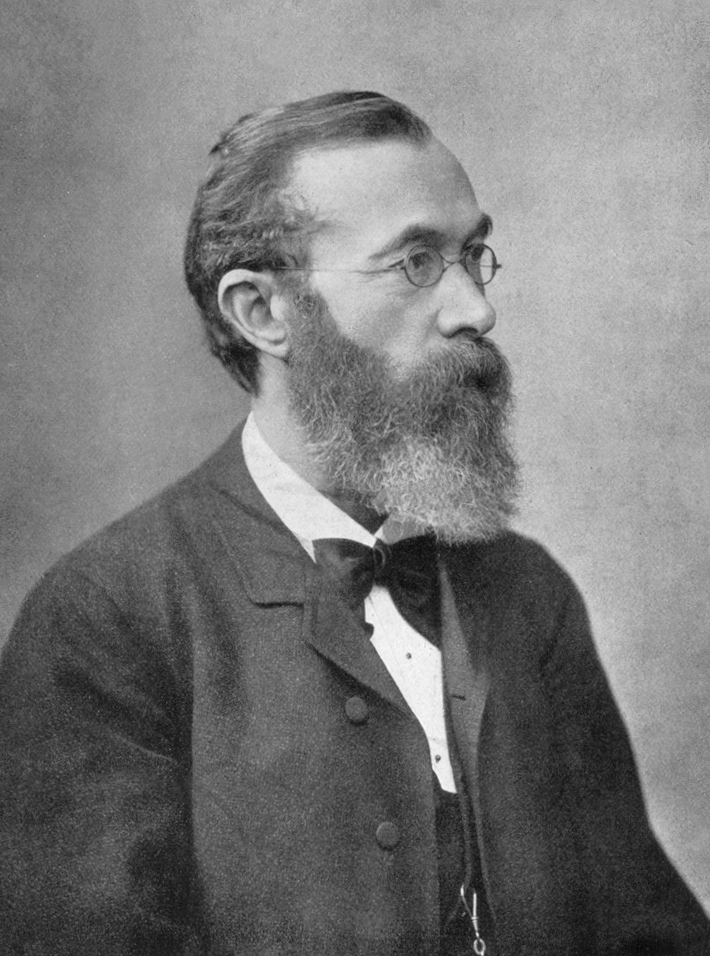
Wilhelm Wundt


In terms of a tangible landmark in the history of forensic psychology the most significant development was the founding of the first psychological laboratory in 1879 by Wilhelm Wundt in Leipzig Germany.

Wilhelm Wundt championed and refined the experimental method within psychology. This rigorous methodology provided the framework for a whole host of applied psychological investigations, among them certain legal issues. For instance, a number of experiments were conducted into the nature of witness testimony, the findings of which highlighted the effects of situational and individual differences; which incidentally are still being examined today.

Hugo Munsterberg


An engaging and controversial figure Hugo Munsterberg was a key figure in the history of forensic psychology. He studied under Wundt at Leipzg before moving to the USA in 1892 to set up an experimental laboratory at Harvard; the principal aim of which was to introduce applied psychology into the courtroom.

He conducted research into witness memory, false confessions and the role of hypnosis in court. One of his earliest experiments tested subjects’ ability to discriminate between sounds heard in quick succession. Almost sixty years later his findings were included as part of the preparation for the trial (which for obvious reasons never actually took place) of Lee Harvey Oswald to help address the question of how many shots had been fired during the assassination of President Kennedy.

William Marston


Another important visionary in the history of forensic psychology. Marston was a student under Munsterberg who conducted research into the physiological effects of deception i.e. lie detector tests.

Alfred Binet


In 1889 Alfred Binet co-founded the first psychological laboratory in France. Having studied medicine and law he was interested in how psychology could be applied within the legal system, particularly in relation to witness testimony. However, it was Binet’s work into intellectual assessment that was to have the greatest forensic impact. Working alongside Theodore Simon, he developed the first psychometric test of intelligence, the principles of which proved the basis for later forensic assessment. For instance, in the US the Wechsler Intelligence test for children was regularly employed as part of proceedings within juvenile court.

Later, group testing became extremely popular, particularly within the armed services as a way of selecting recruits and before long objective tests were being employed across a host of professions and for a variety of purposes as a means of measuring behavioural traits, skills, attitudes etc. Significantly for the practice of forensic psychology this included the judiciary who began allowing test results to be presented as evidence in court.

Click Here For More Information on The History of Forensic Psychology

Understanding Hate Crimes


Very interesting article on hate crimes by John Ireland. The starting point for the article is the premise that despite widespread public support, hate crime law across the United States remains inconsistent and the crimes often go unpunished.

A number of issues are explored including the motives underpinning hate crimes. In discussing hate crimes against homosexuals, the article quotes Karen Franklin, a forensic psychology fellow at the Washington Institute for Mental Illness Research and Training, who argues that there are four major motives common to such crimes: ideology, thrill seeking, peer dynamics and panic defense. The common thread, she says, is that “offenders perceive that they have societal permission to engage in violence against homosexuals.”

The article also reports the views of the American Psychological Association (APA), which contends that most hate crimes are committed by “otherwise law-abiding young people who see little wrong with their actions… [and who see] difference as threatening.” The APA further asserts, “There is overwhelming evidence that society can intervene to reduce or prevent… hate-induced violence that threatens and intimidates whole categories of people.”

Click Here to read the article in full.

Wednesday, February 14, 2007

Announcing A New Forensic Psychology Series From New York University Press


New York University Press is expanding its publishing program in forensic psychology and psychology and crime. The following information is taken from the request for manuscript proposals.

Crime has dominated the public’s concern over the decades. Currently, criminal concerns are foremost in the news and in polls reflecting public attitudes. During the past decade, psychologists have devoted their professional and scholarly efforts toward ameliorating and studying various aspects of crime and criminals. Many advances have been made but have not been adequately communicated to important constituent groups. For example, both practitioners and policy-makers are not always aware of important advances that could better inform their decisions.

This series provides the academic, the professional, and the lay public with well-written scholarly overviews and discussions of the latest advances in theory, research, and practice in various areas of psychology and crime. Each author will provide a review of the status of the field and major developments to help readers in their understanding and decision-making.

The readership includes researchers, teachers, students, and practitioners in forensic psychology, the informed general public, and those concerned with the legal applications of the books’ topics. Suggestive of the topics we intend to support are:

  • Lie detection: state of the science and art

  • The psychology of coerced confessions

  • Police integrity: Keeping the thin blue line true blue

  • Identifying sexual predators

  • Treating sexual offenders

  • Race, ethnicity, and crime

  • The child’s knowledge of right and wrong

  • Predicting recidivism

  • Detecting the fledgling psychopath

  • Criminal profiling: The pros and cons

  • Understanding sentencing

  • Women and crime


  • To Submit Manuscript Proposals

    While the majority of books are anticipated to be single or dual-authored, we will also welcome promising edited volumes, provided that they have core course adoption potential or other significant selling points in the anthology format. Each volume shall review the theoretical and empirical state of the field as well as provide practical suggestions for practice, policy, and future research. The books will address substantive and important issues while employing accessible language and an engaging writing style.

    A proposal should be 5-10 pages in length and should include:


    A statement of the significance, need, and organization of the work

    Its intended readership(s), including particular disciplines, any likely course adoption into specific types of common classes, any likely audience(s) outside the academy or in the professional arena, and any relevant organizations / associations whose members may be interested in the work.

    A brief discussion of similar / competing works and how the proposed volume will distinguish itself

    An annotated chapter outline with 1-2 paragraphs describing what each chapter will discuss

    Sample chapters if available

    An indication of the time line for completion and the anticipated length. Typical manuscripts should be roughly 80,000-90,000 words in total.

    A current copy of the author's curriculum vitae.


    Please direct queries and submissions simultaneously to:

    Dr. Allen K. Hess
    Department of Psychology
    Auburn University at Montgomery
    Box 244023
    Montgomery, AL 36124-4023
    ahess@mail.aum.edu

    Jennifer Hammer
    Editor
    New York University Press
    838 Broadway, 3rd Floor
    New York, NY 10003-4812
    jennifer.hammer@nyu.edu


    Tuesday, February 13, 2007

    Can Witness Memory Be Trusted? Can Liars Be Exposed? Can Confessions Be Untruthful? Can Crime Be Prevented?


    These are just some of the questions that will be tackled during a 3 day Conference at the John Jay College of Criminal Justice in New York.

    Focussing on the latest research in forensic psychology prominent guest speakers include the Hon. Janet Reno, former Attorney General of the United States, Saul Kassin, PhD, leading authority on false confessions and Elizabeth Loftus, PhD, preeminent scholar on memory research.

    This cutting edge event is taking place March 1-3, 2007.

    Click Here to visit the conference home page for full details.

    Eyewitness Memory & Research


    Click Here To Learn More About Eyewitness Memory

    Click Here to learn About Key Figures In Eyewitness Research

    False Confessions


    Click Here To Learn More About False Confessions


    Tuesday, January 23, 2007

    Stockholm Syndrome


    One of the mystery's surrounding the recent case invloving Michael Devlin who was charged with the kidnapping of teenagers Ben Ownby and Shawn Hornbeck is why Shawn Hornbeck who went missing in 2002 never tried to escape or inform anybody of his plight despite seemingly having the opportunity to do so at any time.

    One explanation that has been put forward is the Stockholm Syndrome, a psychological response whereby an abducted hostage, exhibits loyalty to the hostage-taker.

    Click Here To Visit The Stockholm Syndrome Wikipedia Page


    Click Here To Watch A BBC News Item About The Case