To fully appreciate a subject it's important to be aware of the key historical figures who helped shape its identity. This blog article identifies a number of individuals who did just that within the field of forensic psychology.
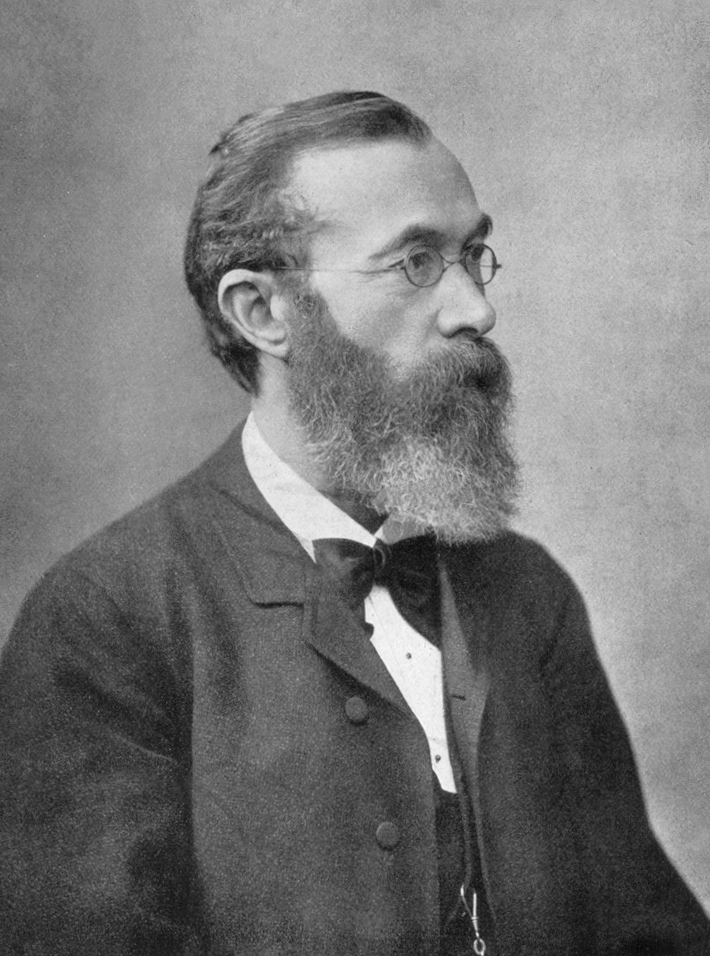
Wilhelm Wundt
In terms of a tangible landmark in the history of forensic psychology the most significant development was the founding of the first psychological laboratory in 1879 by Wilhelm Wundt in Leipzig Germany.
Wilhelm Wundt championed and refined the experimental method within psychology. This rigorous methodology provided the framework for a whole host of applied psychological investigations, among them certain legal issues. For instance, a number of experiments were conducted into the nature of witness testimony, the findings of which highlighted the effects of situational and individual differences; which incidentally are still being examined today.
Hugo Munsterberg
An engaging and controversial figure Hugo Munsterberg was a key figure in the history of forensic psychology. He studied under Wundt at Leipzg before moving to the USA in 1892 to set up an experimental laboratory at Harvard; the principal aim of which was to introduce applied psychology into the courtroom.
He conducted research into witness memory, false confessions and the role of hypnosis in court. One of his earliest experiments tested subjects’ ability to discriminate between sounds heard in quick succession. Almost sixty years later his findings were included as part of the preparation for the trial (which for obvious reasons never actually took place) of Lee Harvey Oswald to help address the question of how many shots had been fired during the assassination of President Kennedy.
William Marston
Another important visionary in the history of forensic psychology. Marston was a student under Munsterberg who conducted research into the physiological effects of deception i.e. lie detector tests.
Alfred Binet
In 1889 Alfred Binet co-founded the first psychological laboratory in France. Having studied medicine and law he was interested in how psychology could be applied within the legal system, particularly in relation to witness testimony. However, it was Binet’s work into intellectual assessment that was to have the greatest forensic impact. Working alongside Theodore Simon, he developed the first psychometric test of intelligence, the principles of which proved the basis for later forensic assessment. For instance, in the US the Wechsler Intelligence test for children was regularly employed as part of proceedings within juvenile court.
Later, group testing became extremely popular, particularly within the armed services as a way of selecting recruits and before long objective tests were being employed across a host of professions and for a variety of purposes as a means of measuring behavioural traits, skills, attitudes etc. Significantly for the practice of forensic psychology this included the judiciary who began allowing test results to be presented as evidence in court.
Click Here For More Information on The History of Forensic Psychology